
July 10, 2025
Where Adventure Meets Serenity
Home to some of the continent’s most beautiful beaches, multiple UNESCO World Heritage Sites, and national parks frequented by bears and wolves — Montenegro is arguably Europe’s best kept secret. There are far fewer crowds here compared to its northern neighbour Croatia, so you’ll often have many of the country’s sites and attractions entirely to yourself — particularly out of season. So, without further ado, here’s our roundup of 14 of the best things to do in Montenegro:
1. Cruise the beautiful Bay of Kotor
If you’ve heard of Montenegro, then you’ll likely have heard of the Bay of Kotor. It’s one of the Med’s most striking landmarks and designated a UNESCO World Heritage Site back in 1979. Around 28km (17 mi) long, it’s surrounded by two striking massifs of the mighty Dinaric Alps — one of Europe’s most impressive mountain ranges stretching over 645km (401 mi) in length.
The best way to see the bay itself is via a boat cruise that takes you across the cobalt waters to ‘Our Lady of the Rocks’ — a tiny islet home to a large Catholic church and accompanying museum. Rumour has it that the island was created over the centuries by seamen laying rocks here after each successful return voyage. The practice continues to this day at an event called fašinada — when local people head to the island every July 22 at sunset.
I love to design things that people can actually buy. I’m staggered by what a boot costs today.
Ali Tufan – Trip Advisor
2. Hike along alpine Balkan borderlines
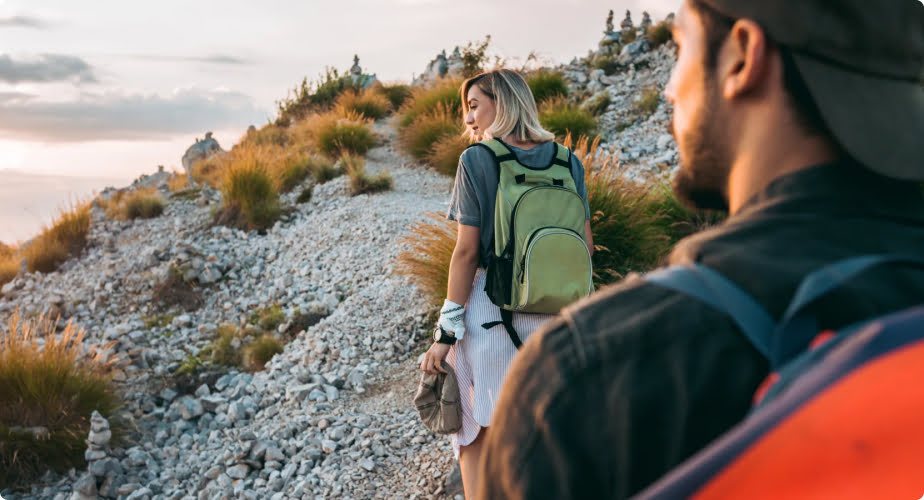
Lace up your hiking boots and get ready to weave your way through the most stunning alpine scenery Montenegro, Albania, and Kosovo has to offer. As you cross the passes between borders, tasty dinners await you and your hiking mates at guesthouse after mountain guesthouse including in Montenegrin hamlets like Babino Polje. In the Ropojana Valley, considered a natural wonder in Montenegro, you’ll find jagged peaks and natural waterfalls in a valley carved out by an ancient glacier. Prepare to feel breathless at much more than just the walk itself!
3. Sample local eats on Luštica Peninsula
A fantastic place to connect with nature, the Luštica Peninsula is set at the entrance to the Bay of Kotor and home to secluded coves, medieval fortifications, and tranquil fishing villages. This is where you’ll get to see the real Montenegro, as local people still live as they have for centuries, growing produce delicacies like olives, cheese, wine, prosciutto, and rakija — a fruit brandy considered the national drink of many Balkan countries.
4. Explore Herceg Novi’s ancient buildings
Dubbed the ‘City of the Sun’, Herceg Novi is a captivating place famous for its glorious weather, ancient fortresses, charming squares, and seafood eateries. It’s a great spot to spend a few days, particularly if you’re a history buff. While there’s plenty to see and do, the star of the show is arguably Fort Mare — a magnificent fortress dating way back to the 13th century. They show occasional open-air cinema screenings and hold concerts here from time to time , so it’s worth checking out what’s on.
It’s also worth hiking up Mount Orjen, whose summit lies at 1893m (6210 ft). There tends to be snow up here for half the year, and it’s got world-class mountain biking trails too if you’re into something even more adventurous. Vineyards abound in the nearby countryside, and you should also make your way to nearby Igalo, with both hot springs and healing sea mud.
5. Birdwatch in the Balkan’s largest lake
The vast Lake Skadar measures an impressive 400 sq km (154 sq mi), meaning it’s officially the Balkans’ largest lake. A serene spot, it’s surrounded by dramatic karst mountains and is renowned for being one of the best places in Europe to go birdwatching. Expect to see a whole host of water birds here, including pygmy cormorants, squacco herons, and endangered Dalmatian pelicans.
6. Wander the tiny town of Perast
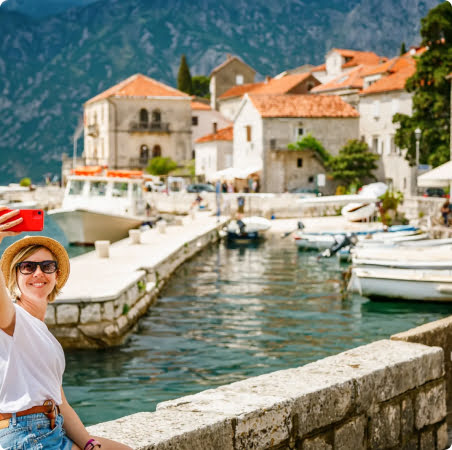
The tiny town of Perast is one of the best-preserved towns on the entire Adriatic Coast, and home to 17 Baroque churches and 19 churches. Not bad for a place that can be walked from end to end in a matter of minutes. It’s well worth a visit for history buffs, as this UNESCO-listed spot has influences going all the way back to the Neolithic Period — otherwise known as the final period of the Stone Age.
Wander around here and soak up the scenery — maybe stop for a cold glass of wine or an iced coffee to call off from the midday sun. Speaking of the sun, get yourself here for sunset — it’s arguably one of the best in the whole of the Adriatic.
A fantastic place to connect
At vero eos et accusamus et iusto odio dignissimos ducimus qui blanditiis praesentium voluptatum deleniti atque corrupti quos dolores et quas molestias excepturi sint occaecati cupiditate non provident, similique sunt in culpa qui officia deserunt mollitia animi.